


Palau has some of the best dive spots in the world. The fact that we were able to dive in the “Serengeti of the sea” just two weeks after getting our scuba certification is absurd. It’s like someone who just started drinking wine, sipping a bottle of vintage Dom Perignon.
We were blown away by the life under the ocean’s surface. On the advice of our instructor from Thailand, we planned as much Palauan dive time as possible, and so, eight hours after our plane landed, we were on a boat, suiting up.
On the first day, we visited two famous spots: small drop off and German channel, and saw an abundance of sea creatures – so many different types of coral, innumerable fish, squid, and best of all, three sea turtles. Sea turtles are so regal. We know it’s a cultural thing, but neither of us can imagine hunting and eating them. They’re just too personable.
 The second day of diving was even more impressive. At Turtle Cove, we initiated the dive by swimming through coral tunnels. Good thing neither of us is claustrophobic.
  Our last dive topped the rest. The current was incredibly strong at Blue Corner, meaning we were carried along and didn’t really have to swim. However, it also meant that our mouths and goggles often filled with water. The strong forces necessitated the use of hooks, which tethered us to rock, so we could remain in one spot while observing a group of sharks. As we watched the gray reef, black tip and white tip sharks swim among schools of fish, eyeing their prey, we were buffeted around by the gale force waters.

It seriously felt like standing on the top of Mt Washington during a storm, with the winds pelting me. Without the hooks keeping us in place, we would have been swept far away. What we saw under the water in Palau exceeded anything we ever imagined. Diving is a bit addictive, and now with ten dives under our weight belts, we can’t wait to go again.

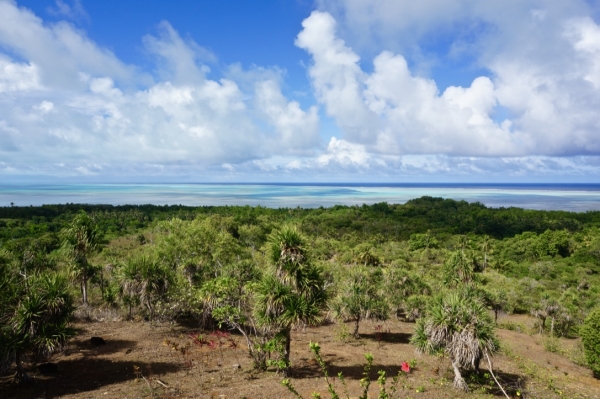 We had hoped to find a quiet beach on which to chill out, but, like Yap, a lot of the coastline is private property. Plus, there aren’t really any swimable beaches. At low tide, the water is so low, it stretches for nearly a mile before it gets deep enough to swim in.

We feel blessed that we were able to finish our trip enjoying the beauty of Palau, both above and below the water.
Beer of Choice: It’s a tie between Red Rooster wheat ale and Red Rooster stout